
Written By
John Haling · John's Urban Timber
September 30, 2025
What is urban timber reclamation and why is it superior to box store lumber?
Urban timber reclamation recovers trees removed from municipal roadsides, yard storms, or private properties that would otherwise be chipped or burned. Reclaimed urban logs feature unique grain character, crotch figure, and wide dimensions unavailable in mass-produced commercial lumberyards.
1. Preventing End-Checking with Log End Painting
Immediately after a tree is felled, open end-grain loses moisture 10 to 15 times faster than side-grain, leading to severe end-checking. As recognized by the Michigan Department of Natural Resources Urban Forestry Division, sealing log ends with latex paint traps moisture inside until the log can be custom sawn.
2. Custom Sawmilling up to 60" Diameter Logs
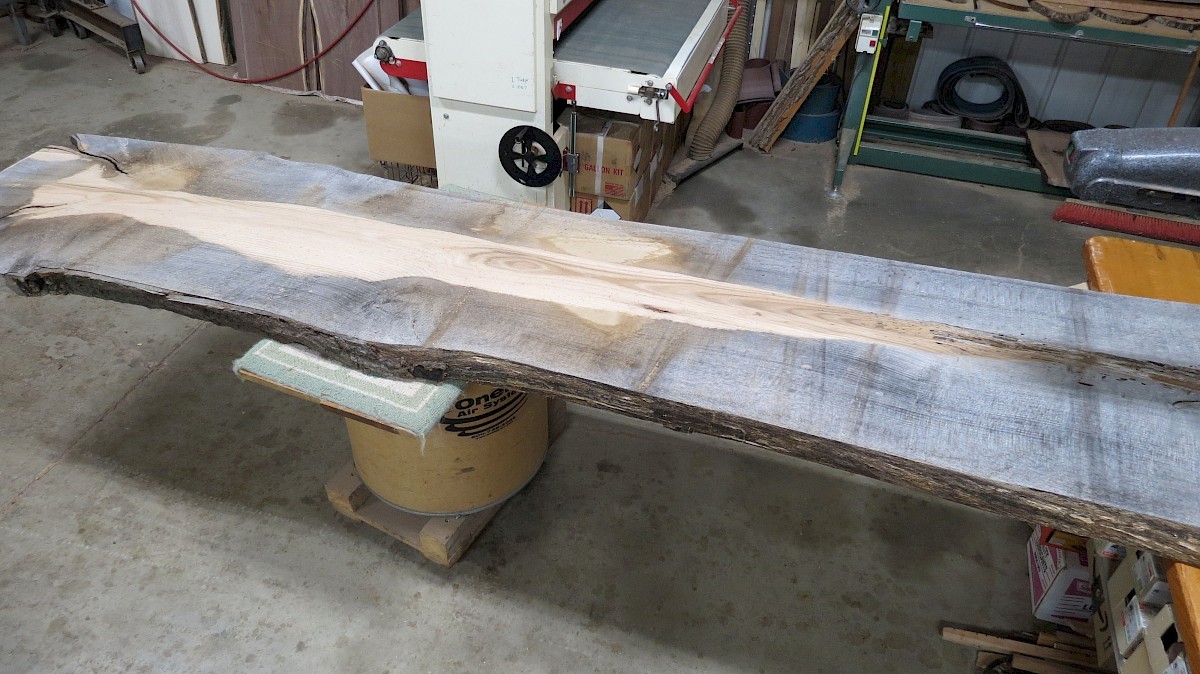
Commercial production mills bypass large forked logs or short yard logs. At John's Urban Timber in Whitmore Lake, MI, our four in-house sawmills process massive logs up to 60 inches in diameter, opening each log to uncover hidden internal beauty.
3. Zero-Waste Wood Utilization
Every portion of a reclaimed log serves a purpose: wide center slabs become dining tables and island tops, while smaller limb cuts and walnut crotches are crafted into mantels, furniture legs, and charcuterie boards.