
Written By
John Haling · John's Urban Timber
September 29, 2025
How does vacuum kiln drying differ from traditional steam and dehumidification kilns?
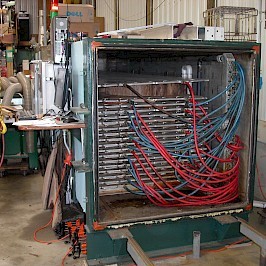
Vacuum kiln drying operates by lowering chamber pressure, allowing water within hardwood slabs to vaporize at reduced temperatures (typically 100°F–110°F). This extracts moisture 3 to 4 times faster than conventional kilns while eliminating internal stress, honeycomb cracking, and thermal color degradation.
1. The Physics of Low-Temperature Vacuum Evaporation
According to the Hardwood Manufacturers Association, traditional steam kilns rely on extreme heat (160°F+) that can darken natural grain and cause tension wood to split. Vacuum kilns lower atmospheric pressure inside a sealed steel vessel, allowing moisture to evaporate gently without baking the wood fibers.
2. Drying Schedules for Thick Live-Edge Slabs
While standard dehumidification kilns struggle with lumber over 1.5 inches thick, vacuum kilns easily process 2", 3", and 4" live-edge slabs. Most Michigan species (Walnut, Sugar Maple, Cherry, Elm) require approximately 4 to 5 days per inch of thickness to reach optimal 6%–8% equilibrium moisture content.
3. Preserving Natural Wood Color & Stability
Low-temperature drying preserves natural sapwood-to-heartwood contrast, preventing the muddy gray discoloration common in commercial steam kilns. Slabs emerge flat, stable, and stress-free, ready for precision jointing and sanding.