Behind the Scenes
Meet John
Learn what John does and everything involved in custom urban timber processing behind the scenes.
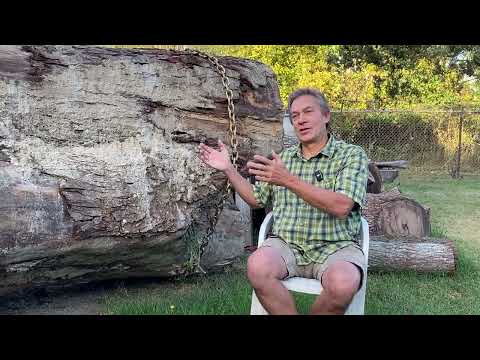
Watch filmJohn explains why we paint and seal the ends of fresh hardwood logs to control rapid moisture loss and prevent end-checking and splitting.
Here is a little example. This is kind of an odd-looking piece right here. It is maple, and you can see that it's been split off of a tree. Most people would look at that and go, "That's firewood." My customer — this came out of her yard — wants to turn that into something she can remember that tree by. So even though there's not much here, we're going to make some slabs or coat racks or a small table out of it so it goes back into her house and means something to her. If you're wondering why the ends are pink, I use a lot of old paint. This is a great place to use up old paint. Most people think it's to keep bugs out, but what it's actually for on the end grain is to keep moisture inside the log until it is sawn. That way, by keeping the moisture in, you don't get rapid end-checking or cracking. As I tell customers who have logs and want to put paint on them before bringing them out: go underneath your workbench! Everybody has a couple gallons or quarts of leftover paint they aren't using. It's a great place to use it up, and it serves a critical purpose.
Keep Watching
Behind the Scenes
Learn what John does and everything involved in custom urban timber processing behind the scenes.
Watch film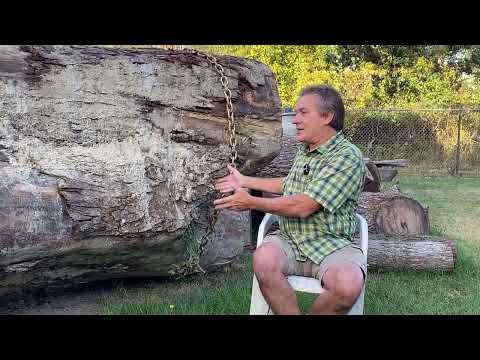
Shop Tour & Inventory
Tour John's shop in Whitmore Lake, explore live-edge slab inventory, and learn about hardwood species.
Watch film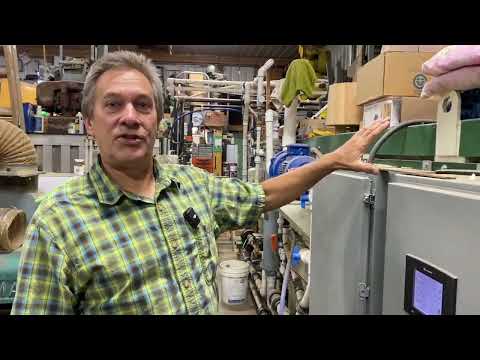
Vacuum Kiln Drying
John explains how vacuum kiln drying works, moisture testing, and why it prevents wood checking and warp.
Watch film