
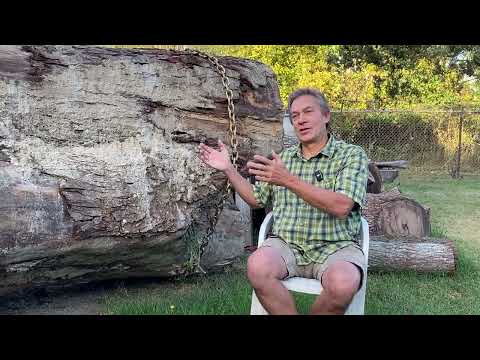
Behind the Scenes
Meet John
Learn what John does and everything involved in custom urban timber processing behind the scenes.
Watch filmJohn Haling explains the vacuum kiln drying process, how low temperatures extract moisture safely without stress or warping, and how moisture content is tested for live-edge slabs.
The vacuum kiln is a very important part of the process. It allows me to do thicker wood properly. In my opinion, dehumidification kilns are good up to about 1½ inches. Standard steam kilns do 2 inches, but on a long schedule. Most woods that I process — with the exception of hickory, walnut, and white oak — are in here for about 4 to 5 days per inch of thickness. Right now, I've got 2-inch white oak in here on the second half of its drying schedule. Inside the vacuum vessel, the wood is heated while under vacuum pressure. This pulls the moisture out much gentler than any other form of kiln drying, preventing internal stress, honeycomb splitting, and color degradation.
Keep Watching
Behind the Scenes
Learn what John does and everything involved in custom urban timber processing behind the scenes.
Watch film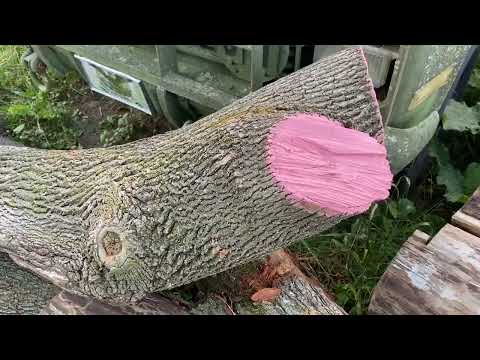
Log Preparation
Why we paint and seal the ends of hardwood logs to control moisture loss and prevent splitting.
Watch film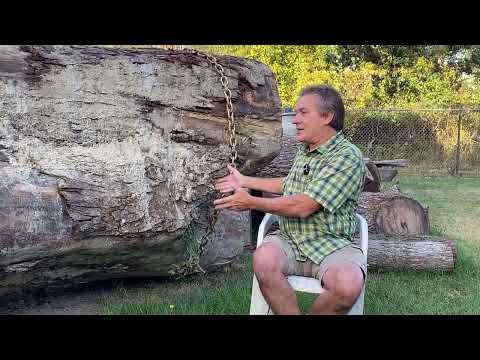
Shop Tour & Inventory
Tour John's shop in Whitmore Lake, explore live-edge slab inventory, and learn about hardwood species.
Watch film